Temporal filtering
The original version of this document is located at https://docs.qfield.org/how-to/advanced-how-tos/temporal-filtering
Temporal Filtering
QField replicates active temporal controller settings configured in QGIS to dynamically filter vector layer features on the map canvas.
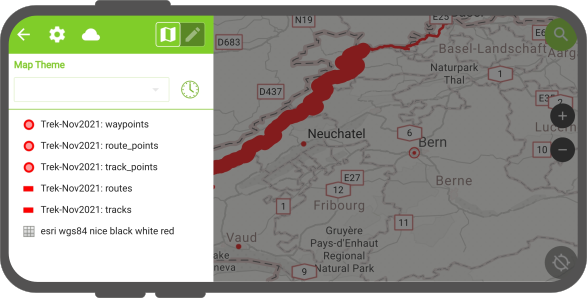
Temporal filtering status displays via a clock icon in the Side Dashboard:
- Grey clock icon: Temporal filter is inactive.
- Green clock icon: Temporal filter is active, displaying only features falling within the defined time range.
Configuring Temporal Filtering in QGIS
🖥️ Project Manager
Configure temporal settings on vector layers in QGIS before exporting projects to QField.
Workflow
- In QGIS, navigate to Vector Layer Properties… > Temporal.
- Enable Dynamic Temporal Control.
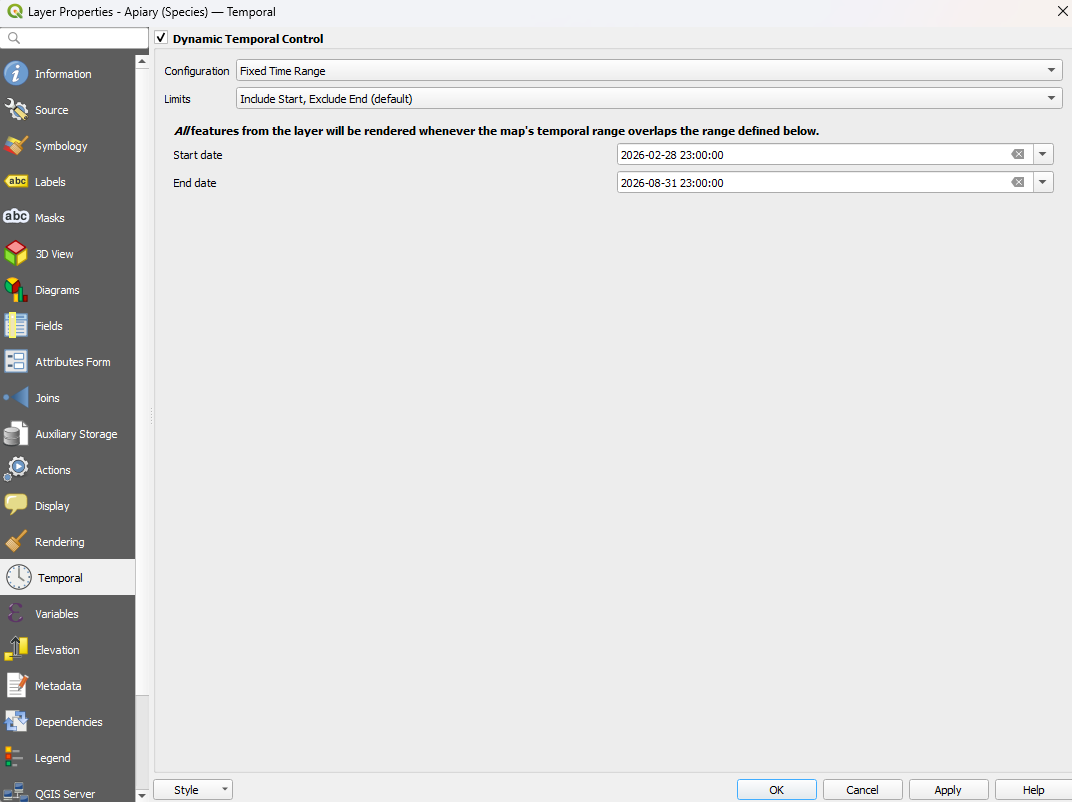
- Select your preferred temporal configuration mode (such as single field datetime, separate start/end date fields, or event duration).
Read more in the QGIS Vector Layer Temporal Properties Documentation. - Save your project and synchronize it to QField.
Applying Temporal Filters in QField
📱 Fieldwork
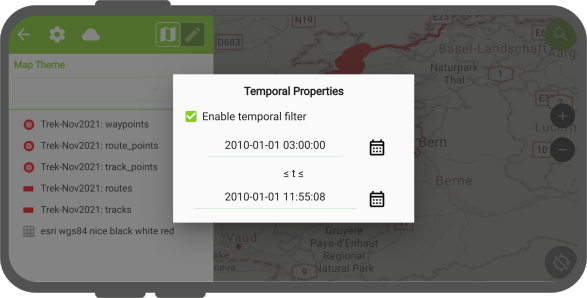
Filter layer features by time range directly on your mobile device.
Workflow
- Open the Side Dashboard.
- Tap the clock icon in the header bar.
- Select or define the desired time range.
- Close the panel to inspect temporal features rendered on the map canvas.
Note
QField temporal filtering operates identically to the fixed range temporal navigation mode in QGIS.